
Why We Clip your pet for An ultrasound examination
Aimee Bebbington
VVS Sonographer
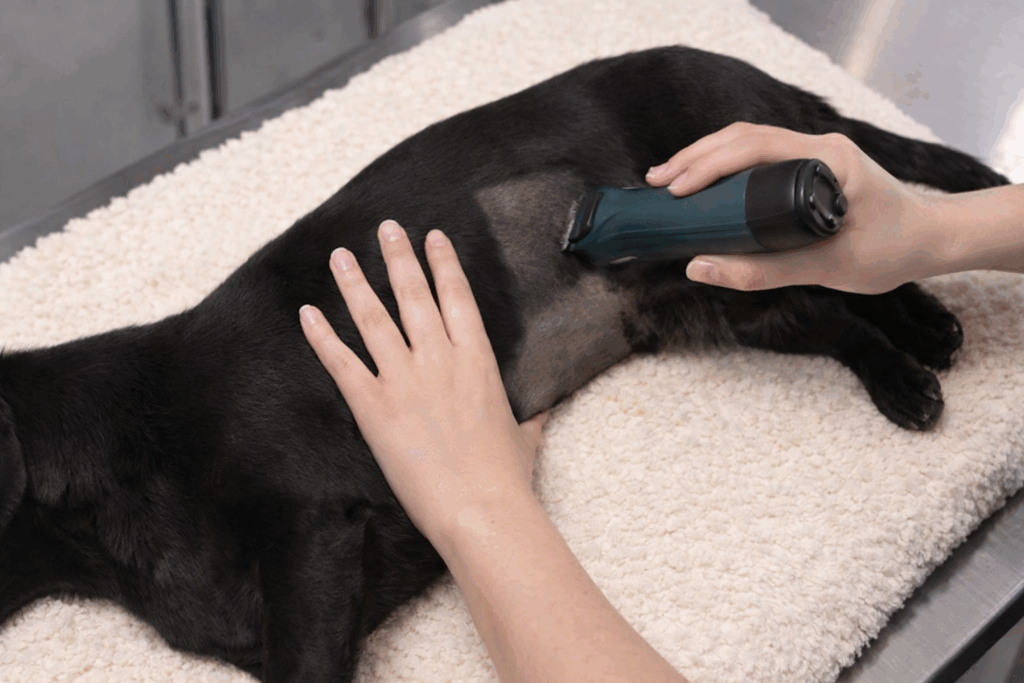
VVS Sonographer Aimee Bebbington explains why it is so important that your pet has their fur clipped ahead of any ultrasound procedure.
Have you ever had an ultrasound examination or seen one performed? Then you will know that it requires clothes to be removed from the area being examined and ‘Jelly on the belly’ to obtain images. It’s the same for pets, except instead of removing clothing, we clip the fur over the area being examined, whether it’s for a cardiology work-up or an abdominal ultrasound.
Clipping fur is a simple but important step in preparing patients for ultrasound examinations. Ultrasound works by sending sound waves through the body to create pictures. The quality of an ultrasound image and therefore how accurately we can interpret it depends on how well the sound waves can move between the probe and the patient’s skin. Fur, dirt, and air block these waves, preventing the machine from producing clear images. Properly clipping and preparing the skin ensures we get the best possible, diagnostic-quality images.
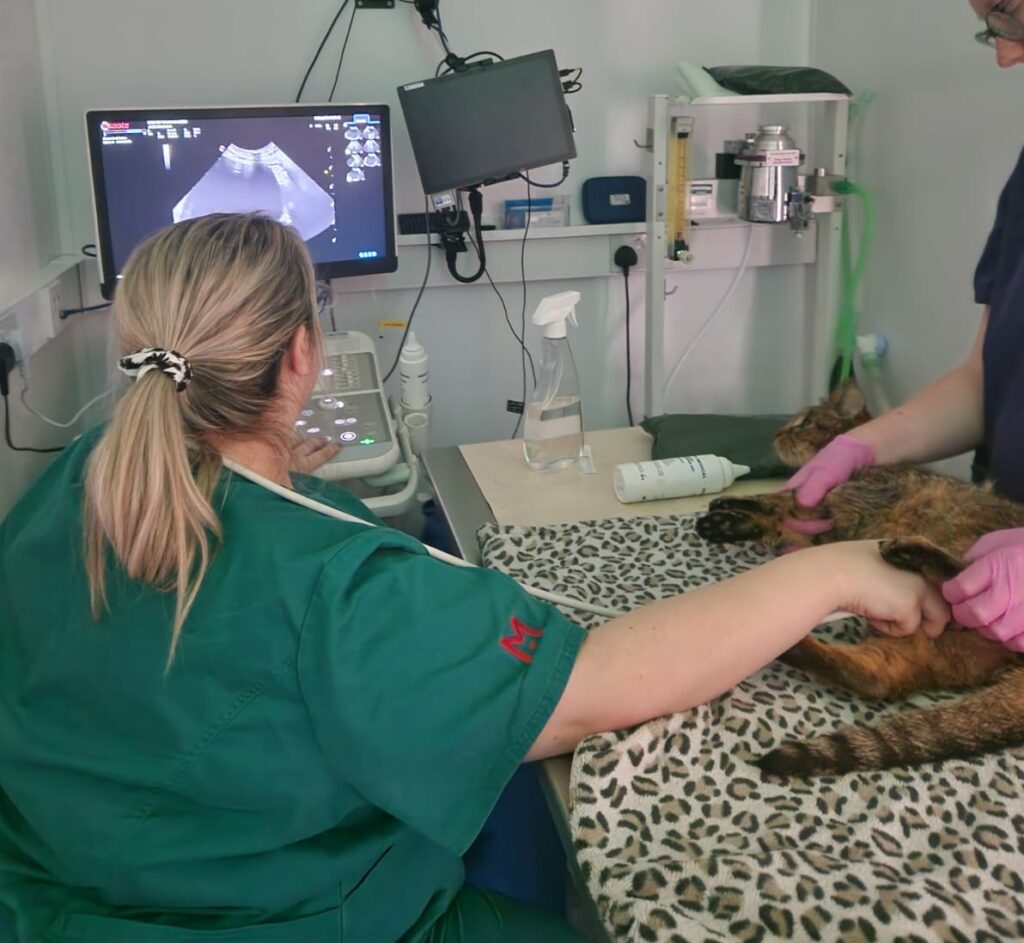
Consequently, if fur is not clipped, the ultrasound images can be blurry or unclear, making it hard to see organs and structures properly which means we cannot perform the procedure.
Beyond improving image quality, clipping also improves scanning efficiency and patient comfort. When the transducer (ultrasound probe) can glide smoothly over the skin, your veterinarian can obtain images quicker and with less pressure. This can reduce the stress for your pet and shortens overall procedure time. For sedated or anaesthetised patients, a well-prepared scanning area can minimise the duration of anaesthesia and associated risks.
In short, clipping the fur is an essential part of any ultrasound. It ensures the sound waves can pass properly, improves image quality, makes the scan more efficient, and keeps your pet more comfortable. It directly affects how reliable the results are and helps us provide the best possible care.
After the Ultrasound -Caring for the Clipped Area
- Keep the area clean and dry.
- Avoid excessive rubbing or scratching or letting your pet lick the area until the fur grows back.
- Check the skin for redness, swelling, or irritation. If you notice any of these signs, contact your veterinarian.
- Fur will usually start to grow back within a few weeks, depending on your pet’s coat.
- If your pet feels cold while the fur is growing back, they can wear a jumper or coat whilst out on walks. Just make sure it doesn’t rub or irritate the clipped area.
FAQ’s
Does it hurt my pet?
No, clipping does not hurt your pet. It is quick and painless.
Why do both sides need clipping?
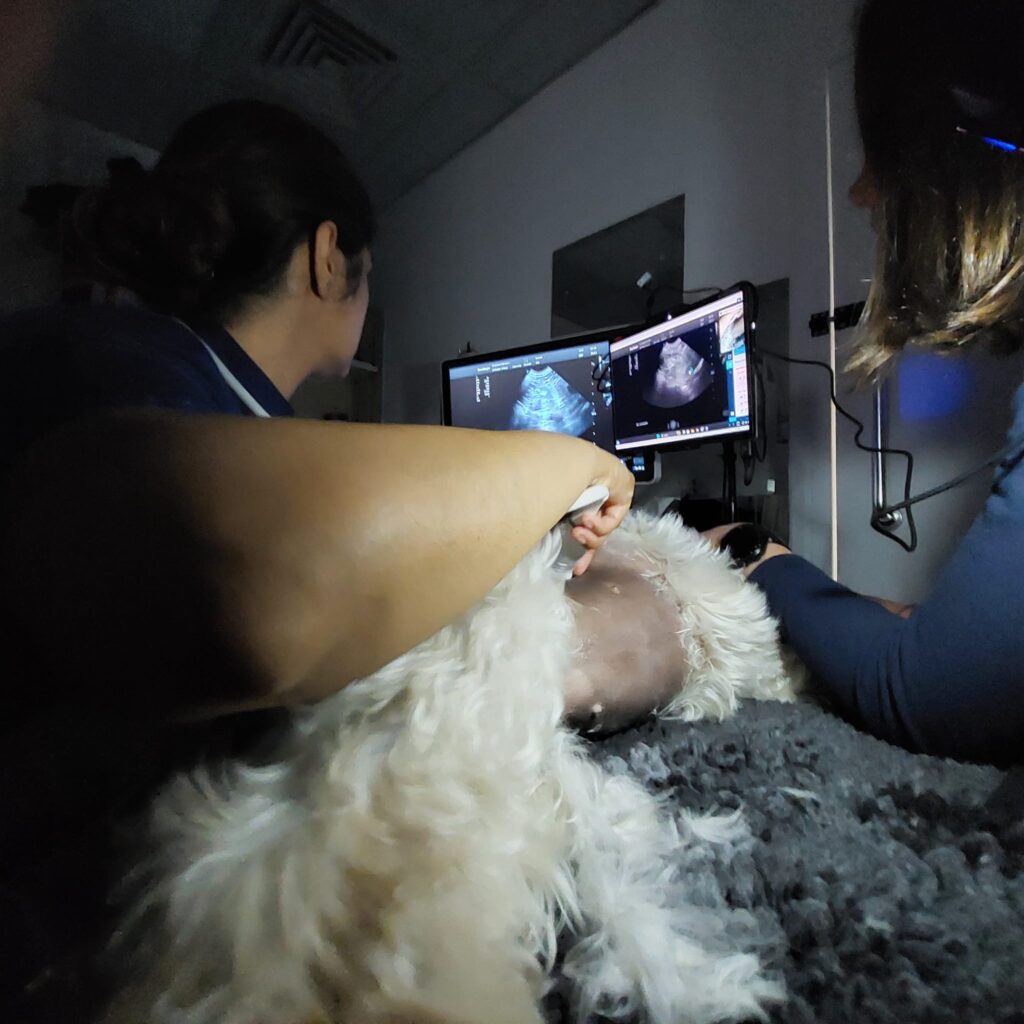
We need to clip both sides of the patient, this allows us to visualise the organs from different angles and ensure a thorough examination.
Will the fur grow back and look the same?
Yes, the fur will grow back, but it may take a few weeks to return to its normal length. In most pets, it will look the same as before, though sometimes it may appear a little softer or lighter at first. Over time, it should fully return to its usual coat.
If you have any further questions, please do not hesitate to ask your Veterinary Surgeon or Veterinary Nurse, who will be happy to help.